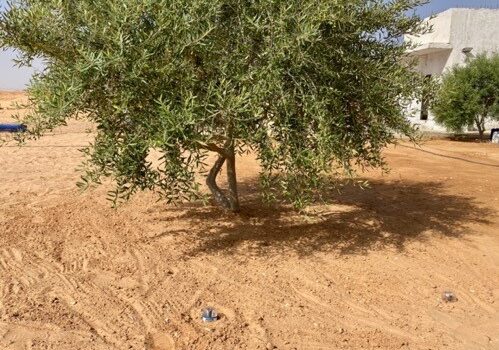
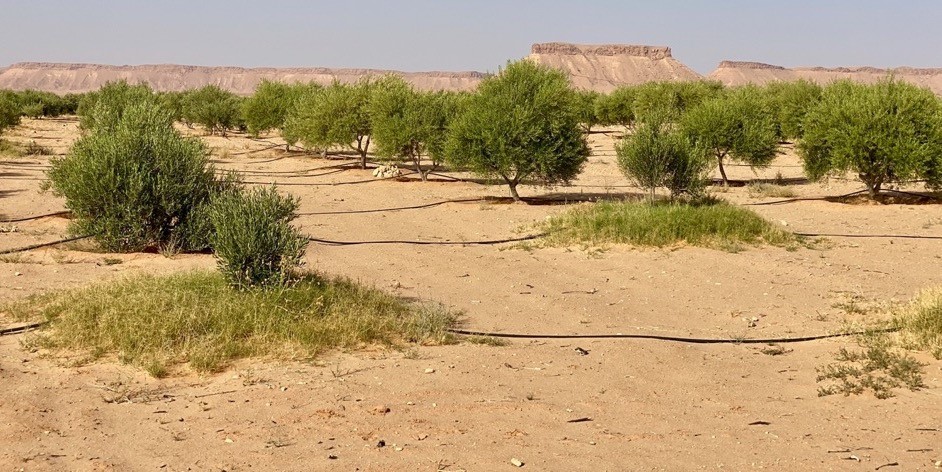
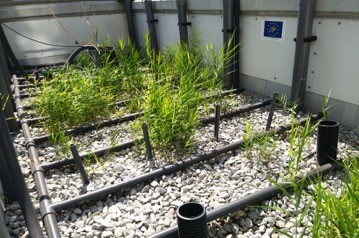
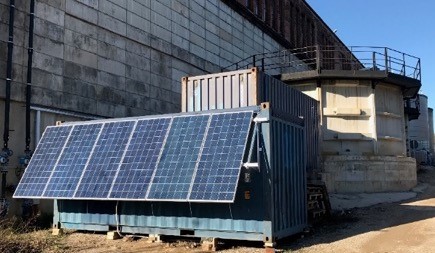
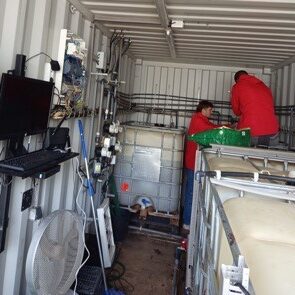
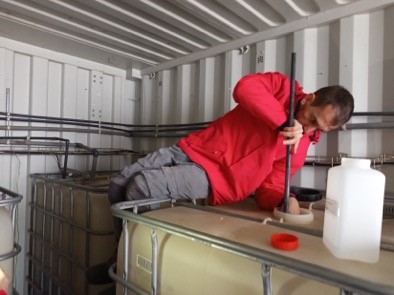
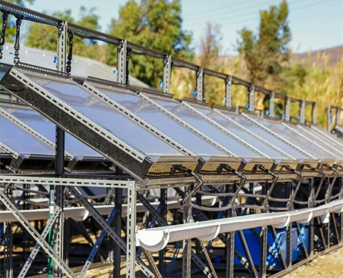
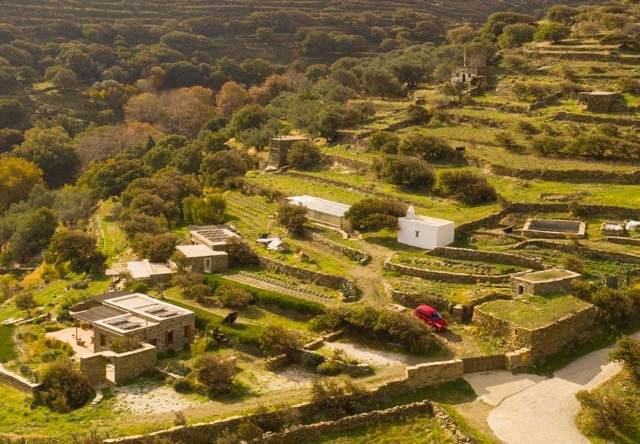
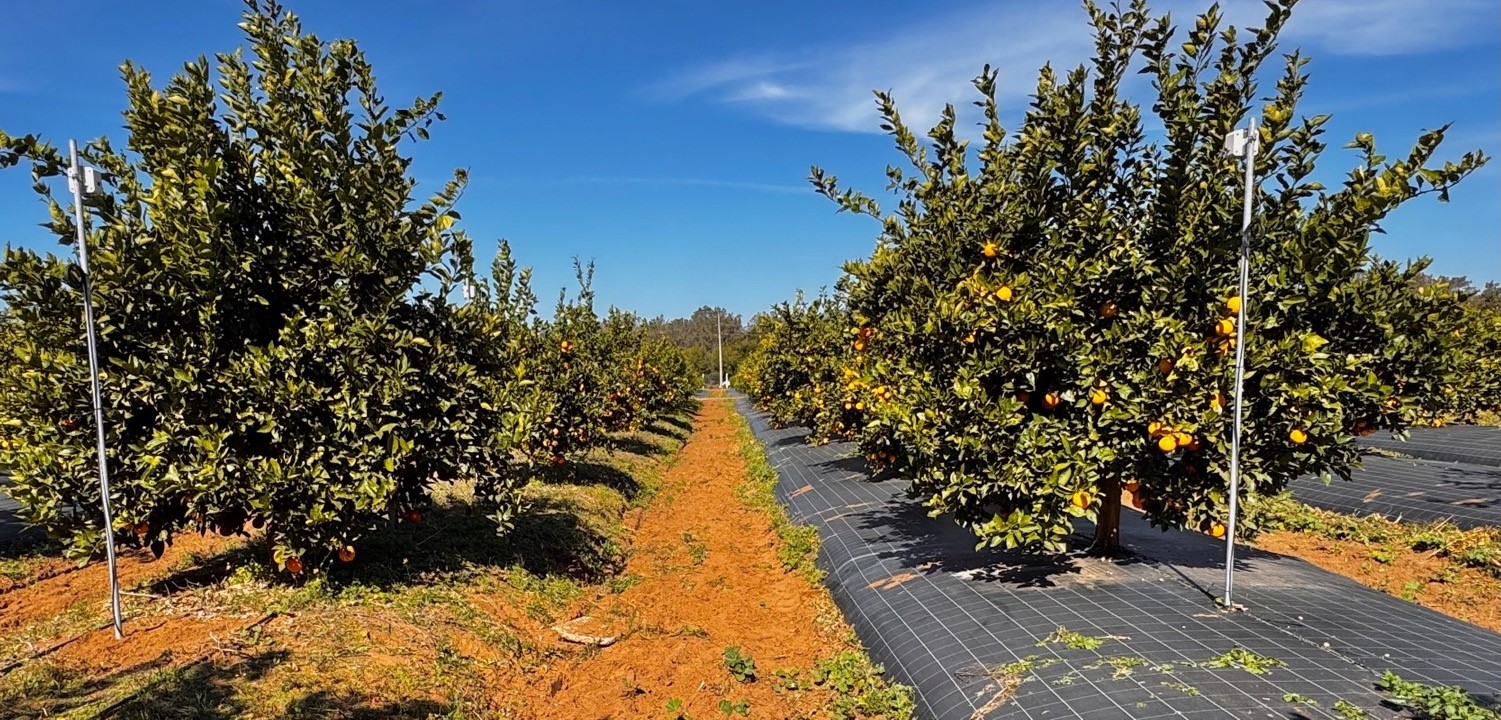
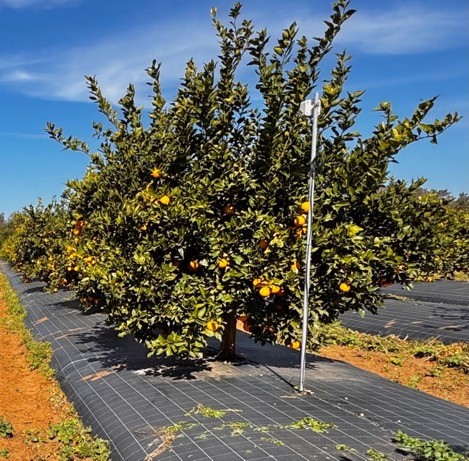
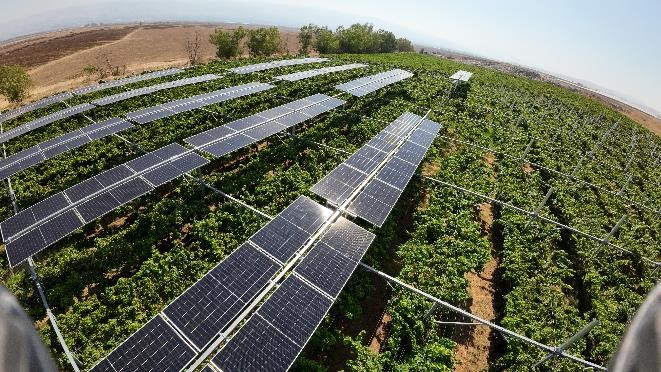
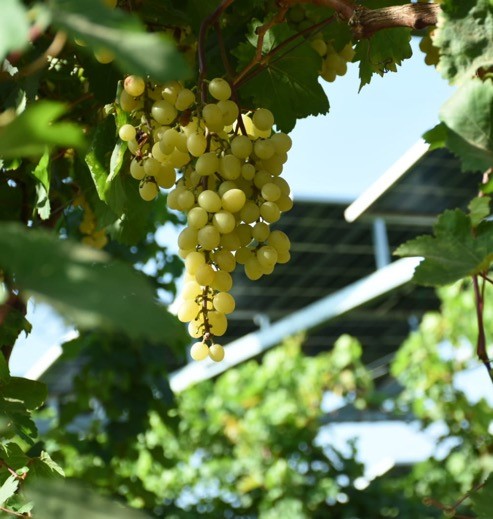
The pilot consists of implementation an underground irrigation system and solar pumping. A single annual irrigation is conducted (during December and January, post-olive harvest), sufficient to meet the annual needs of each tree. Its duration ranges from 2 to 5 weeks (depending on olive tree size) and runs continuously day and night without interruptions. The system is currently fully automated using water and soil sensors. The replication site’s completion has enabled the collection of sensor data, utilized for AI modelling purposes.
In the development of the research conducted at the Complementary Demosite in Tunisia, the team from the University of Tunis El-Manar (Laboratory of Analysis and Processing of Electrical and Energy Systems (A.P.E.E.S), Science Faculty of Tunis), led by Professor Ali Gharsallah and software specialist Aloui Noureddine, was responsible for all data acquisition. They developed and built a remote control and supervision system for data acquisition, which included climate sensors (ambient temperature and relative humidity) and soil moisture sensors at depths of 40 cm and 60 cm. This system was used to compare conventional drip irrigation with underground irrigation methods.
Remote Control and Supervision System (RCSS) is a secure and advanced technological solution for controlling and monitoring equipment or systems from a remote location. It is developed by the Laboratory of Analysis and Processing of Electrical and Energy Systems (A.P.E.E.S), Sciences Faculty of Tunis, University of Tunis El-Manar, and includes a webpage where the results are directly displayed, providing real-time visualizations and comprehensive analysis of the data collected from the climate and soil moisture sensors.